The insight was already there, but no one was looking for it
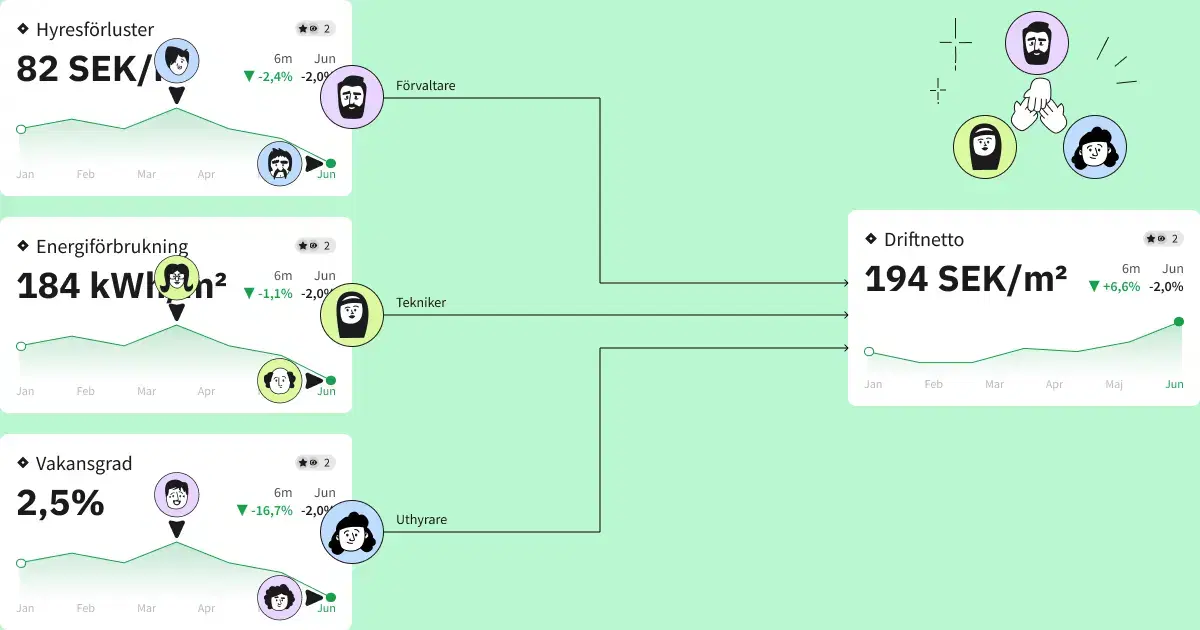
Most real estate companies already have the data that reveals anomalies. Energy consumption, vacancy rates, maintenance costs—everything is logged; everything is stored in some system. The challenge lies elsewhere: someone has to know which figure to compare with what, and it takes time to make that comparison often enough to catch an anomaly before it has a chance to cost a lot—time that’s rarely available when you’re already swamped with a hundred other properties.
In practice, this means that comparisons are made when there’s time, not when they’re needed. A quarterly report uncovers a trend that’s already been going on for three months. A property manager senses that something is wrong with a property, but rarely has time to pinpoint exactly what it is until it’s already visible in the net operating income.
The system searches for you instead
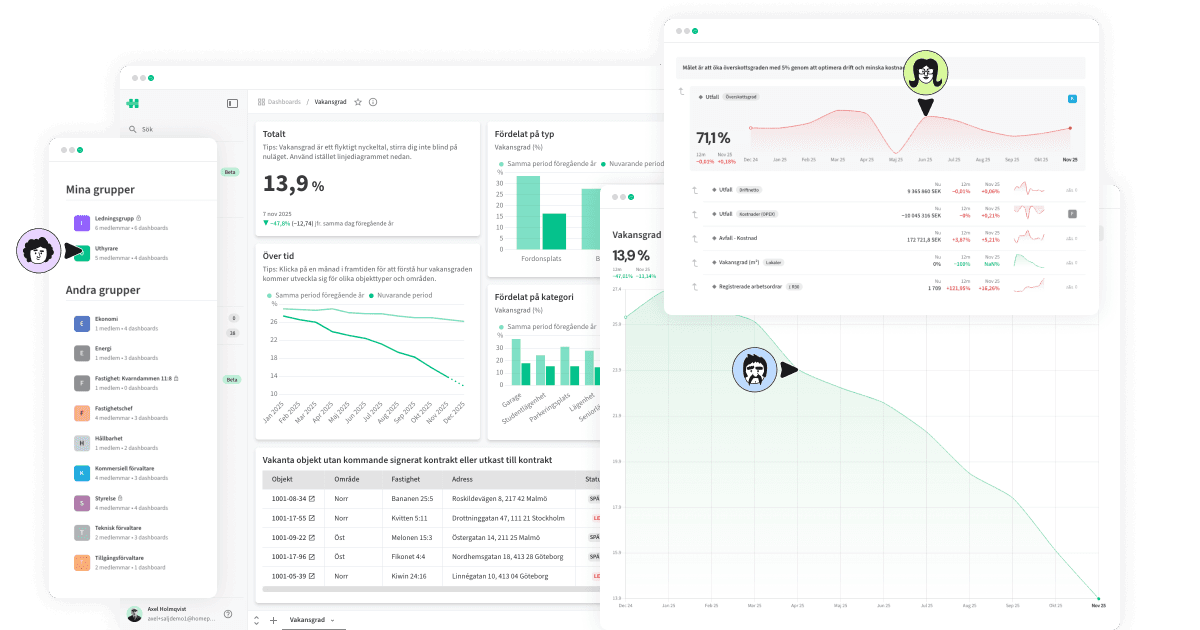
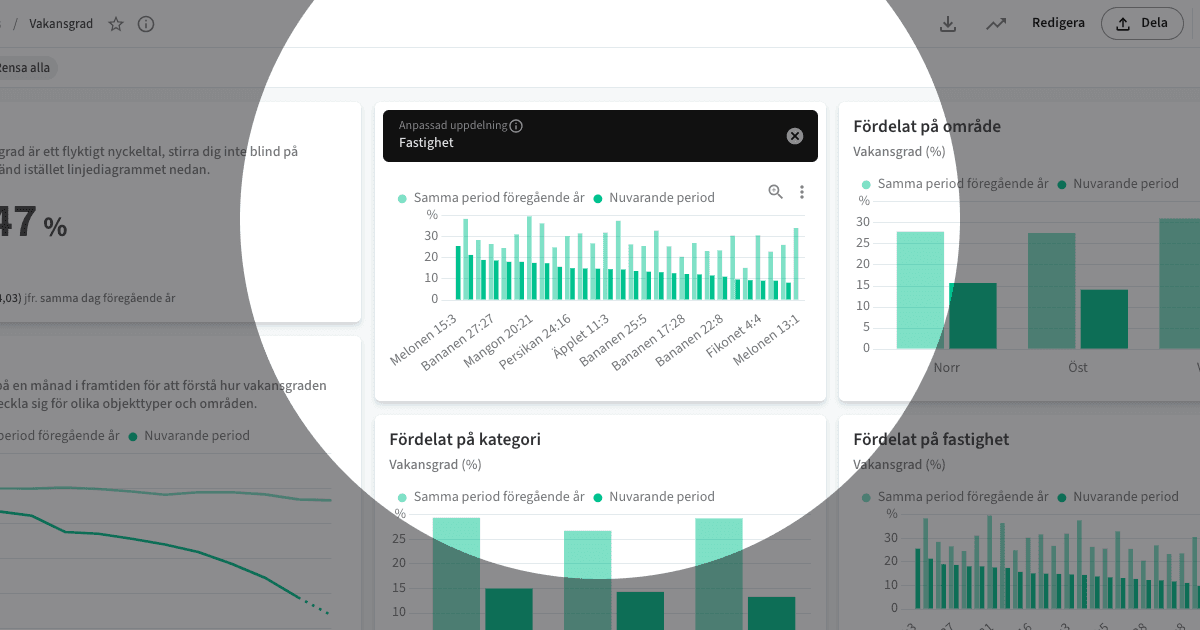
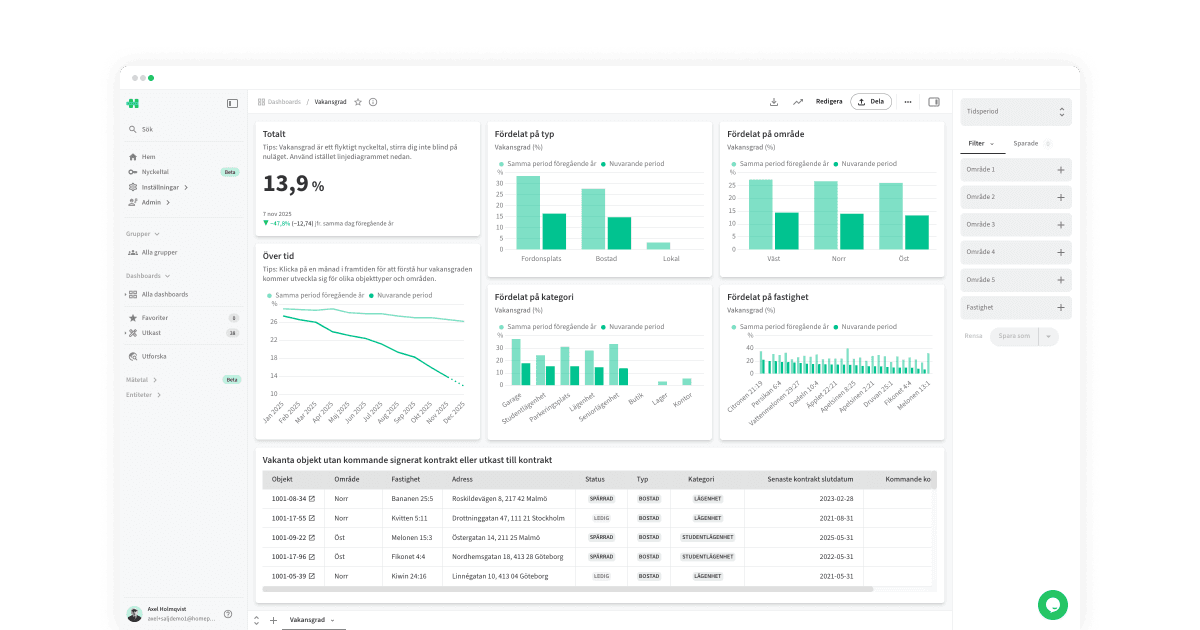
What we’ve built flips the script. Instead of someone having to actively look for anomalies, the system continuously compares each property against its own historical pattern and against the rest of the portfolio, and flags when something stands out enough to be worth looking into. No one needs to remember to check. No one even needs to know what they’re looking for.
Say a property’s energy consumption suddenly increases by 15 percent compared to the same period last year, without any change in the vacancy rate or any other obvious factor. That’s exactly the kind of signal that would otherwise get lost in the crowd—too small for anyone to notice by chance, but large enough to point to a real problem, such as a broken ventilation control system that’s been running at too high a setting for weeks.
From Passive Insight to Active Alert
The difference may sound technical, but it’s immediately noticeable in everyday operations. Instead of a property manager having to keep track of a hundred properties in their head at once, they receive a few concrete alerts to act on—the properties and key metrics that are actually deviating right now. The rest of the portfolio manages itself, quietly in the background, until something changes.
This is the kind of monitoring that lets you stay one step ahead, rather than having to explain after the fact why something went wrong.
Want to see what deviations already exist in your portfolio? Book a demo →