The data is there, but it's not enough
Real estate companies have a huge amount of data; that’s not the problem. Fault reports are logged, energy usage is measured, and work orders come in. Most of it is recorded somewhere.
The problem is that the data resides in systems built for reporting—not to help anyone make the next decision. A monthly report showing that fault reports have increased by 34% at Björkgatan 4 isn’t meaningful information for someone who has 47 open cases and needs to prioritize their afternoon. In that situation, you want to know what’s most important right now, and what will happen if you wait?
Most systems don’t answer that question. And a large part of the explanation lies in where the data actually ends up within the organization.
The key performance indicators reside with the finance department, decisions are made in operations.
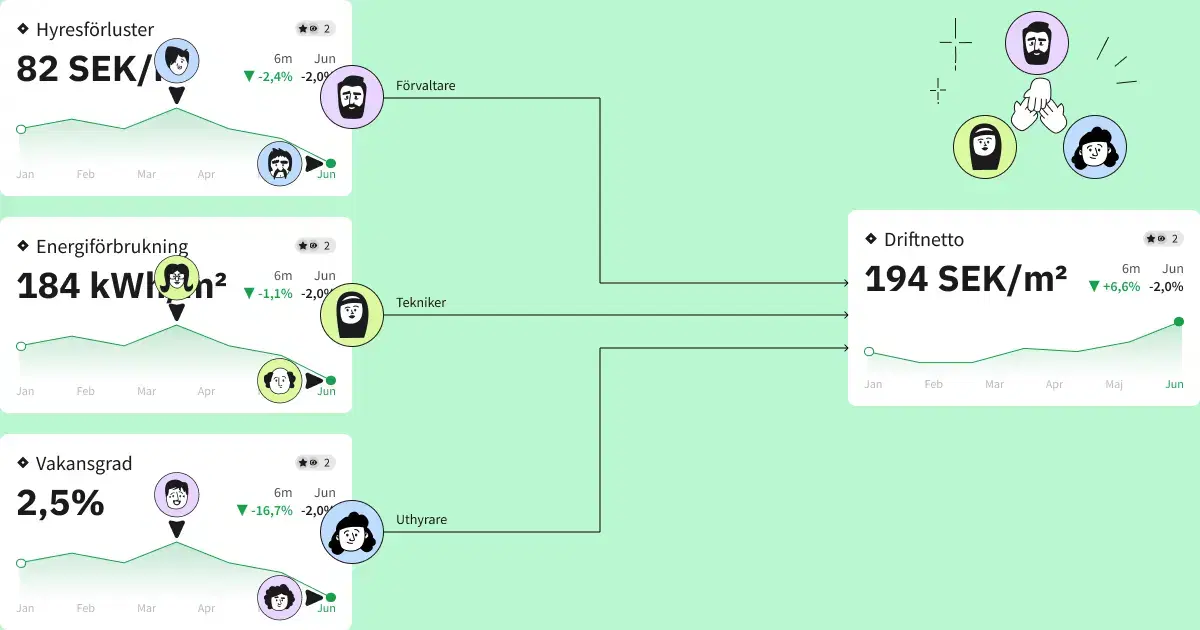
Net operating income is the metric that brings it all together. Vacancy rates, maintenance, rental income, service calls—it all ultimately lands there. But in most real estate companies, net operating income is presented once a month in a report managed by the CFO and shared with the property manager at a quarterly meeting. The same data that could have guided operational priorities on Tuesday afternoon thus reaches the wrong person, in the wrong format, too late.
This creates a gap—and a costly one at that. The CFO sees that a district is deteriorating. The property manager in that same district acts on whatever is being shouted the loudest that day. No one is wrong; they simply have different perspectives on the same reality.
Elin Åkerblom at Aspia puts it this way: “As a CFO, you have to ensure that everyone in the organization has the same version of the truth.”
Having everyone look at the same report is a good start, but it won’t be enough by 2026. The property manager doesn’t need the same report as the CFO—they need the same data, in a format that actually helps them prioritize the next task.
What’s actually needed
Data without guidance is just information. What the property manager needs isn’t more reports—it’s an overview of what’s most important right now, with enough context to understand why. What’s happening, and what can we do about it if we act today?
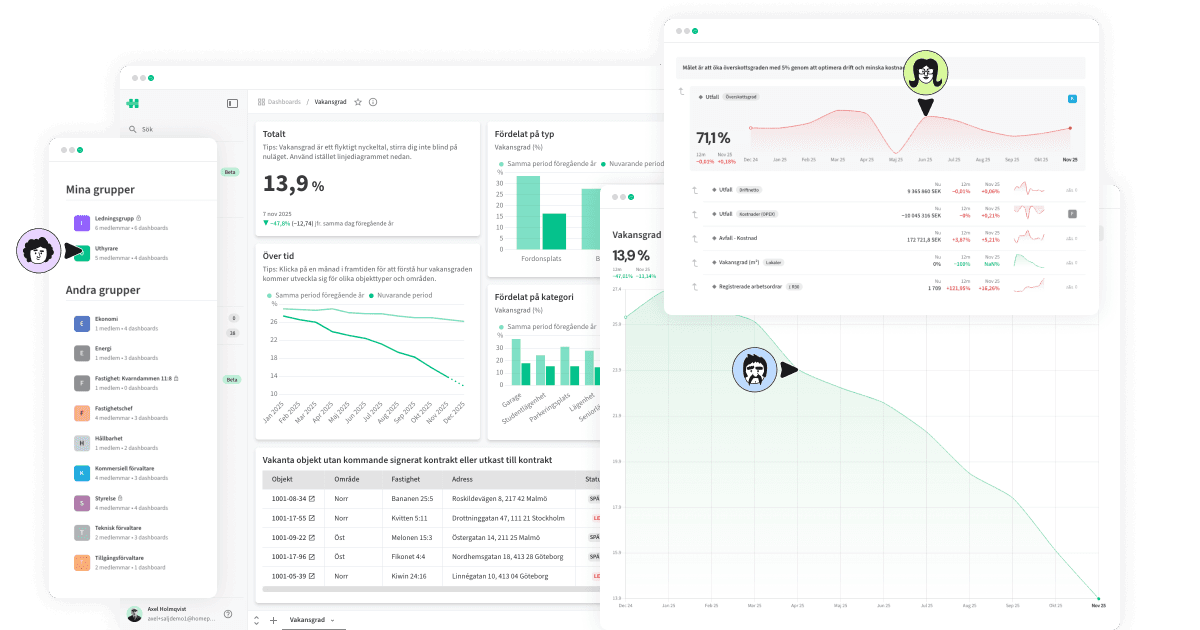
In Homepal, the net operating income is linked to the key performance indicators that drive it, available to the entire organization and always up to date. The property manager logs in and immediately sees which properties in their portfolio are deviating, what’s causing the deviation, and what needs to be addressed. The CFO sees exactly the same data, at the level of aggregation they need. The same version of the truth—tailored to the person using it.
The proactive insights automatically identify what is currently having the greatest impact on net operating income, down to the district and property level. Nothing requires manual analysis. No surprises in the financial statements.
Telge Bostäder reduced open work orders by 80 percent. Grannstaden reduced vacancy time by 42 percent. Stockholmshem saved 10 million kronor in six months. These results weren’t achieved because the organizations received more data—but because the right data reached the right person at the right time.
Want to see how the key metrics tree works in Homepal? Book a demo →