It’s not enough to just see the problem
Identifying an issue isn’t the same as solving it. You know that, of course. The number of trouble tickets for a property is increasing week by week. It shows up in the system. It’s brought up at a meeting, measures are considered, and perhaps a decision is made. But… then everyday life rolls on, a couple of weeks turn into a couple of months, and there you are with a property whose net operating income is a bit… so-so as the fiscal year-end approaches.
It’s a pattern we see often, and it’s not because you and your colleagues lack either data or expertise. It’s because the step between insight and action lacks structure—and sometimes ownership. The cost of inaction is rarely visible in the moment. And once someone does take charge of it, there’s no natural way to follow up on whether it actually had an effect.
Three places where insights get stuck
Ownership is unclear. Without a clear owner, nothing happens—even if everyone sees the same thing.
Prioritization lacks context. A rising trend in fault reports competes with everything else in a manager’s daily routine. If, on top of that, it’s unclear what the cost is of not addressing an issue, it can be difficult to justify moving it ahead of what’s already in the queue.
Follow-up is lacking. Even when a corrective action is initiated, it’s rare for anyone to check whether it actually had an effect. The next time the same issue arises, the starting point is the same as last time.
What It Actually Costs
Rent loss that could have been prevented, maintenance costs that escalated because no one acted early enough, vacancies that lasted longer than necessary. These costs rarely appear as a separate line item in the budget. They are absorbed into the final results and explained after the fact.
Mimer Fastigheter reduced its lost rent by 5.15 million kronor in eleven months. Telge Bostäder reduced open work orders by 80 percent. Grannstaden reduced vacancy time by 42 percent. These results came about because the insights led to concrete actions that were actually followed through on—not because they gained access to better data.
How Homepal Bridges the Gap Between Insight and Action
When Homepal identifies a deviation, you can immediately turn it into a concrete action. You assign a responsible person, specify the expected outcome, and set a deadline. Homepal then automatically follows up to verify whether the action was actually taken.
An anomaly identified at a property on Monday morning can be assigned, prioritized, and tracked before lunchtime—without emails or meetings. And once the deadline has passed, you’ll know whether the action was effective or if the issue needs to be addressed again.
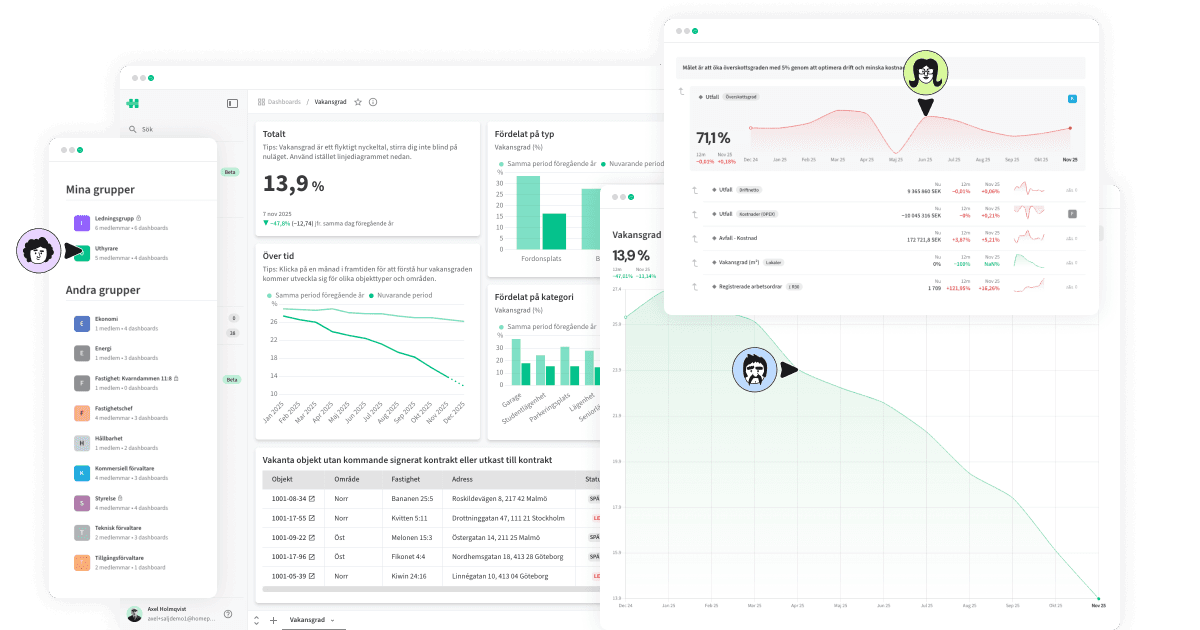
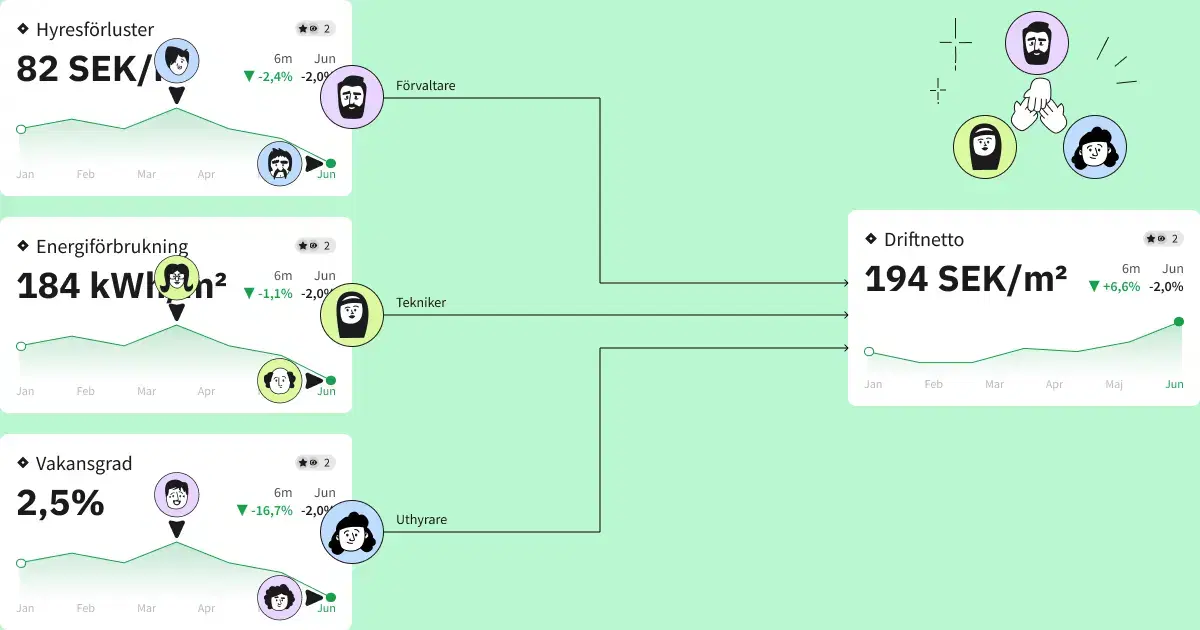
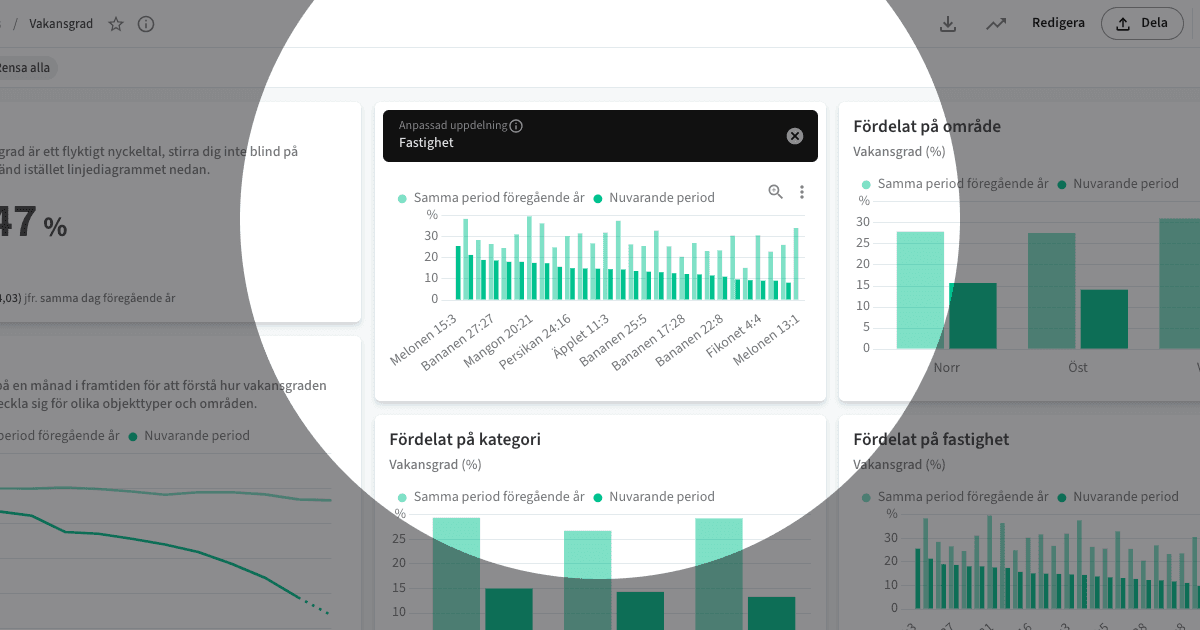
This is a key feature of Homepal. The proactive insights automatically identify what is currently having the greatest impact on net operating income, down to the district and property level. The actions enable you to address these issues in a structured manner. And the key performance indicator (KPI) tree ensures that the entire organization is working toward a shared understanding of net operating income and the key metrics that drive it.
Together, these features enable the finance department not only to see what’s happening, but also to actually influence the outcome before it’s reflected in the next financial statement.
Want to see how actions and follow-up work in Homepal? Book a demo