The financial statements show what happened, not what is about to happen.
Most real estate companies keep a close eye on their net operating income. Monthly reports, quarterly reviews, and annual budgets that are reconciled against actual results. The monitoring system works.
The problem is that it’s always backward-looking.
By the time vacancy rates have risen too high, maintenance costs have spiraled out of control, or rental losses have increased, there’s not much left to do about it. The financial statements reflect the outcome of decisions that were made—or not made—months ago.
The issue is rarely a matter of expertise—it’s about how most real estate companies work with data structurally.
The signals are already in your systems
Factors driving net operating income into the red are almost always visible in operational data before they reach the financial reports. Here are a few examples:
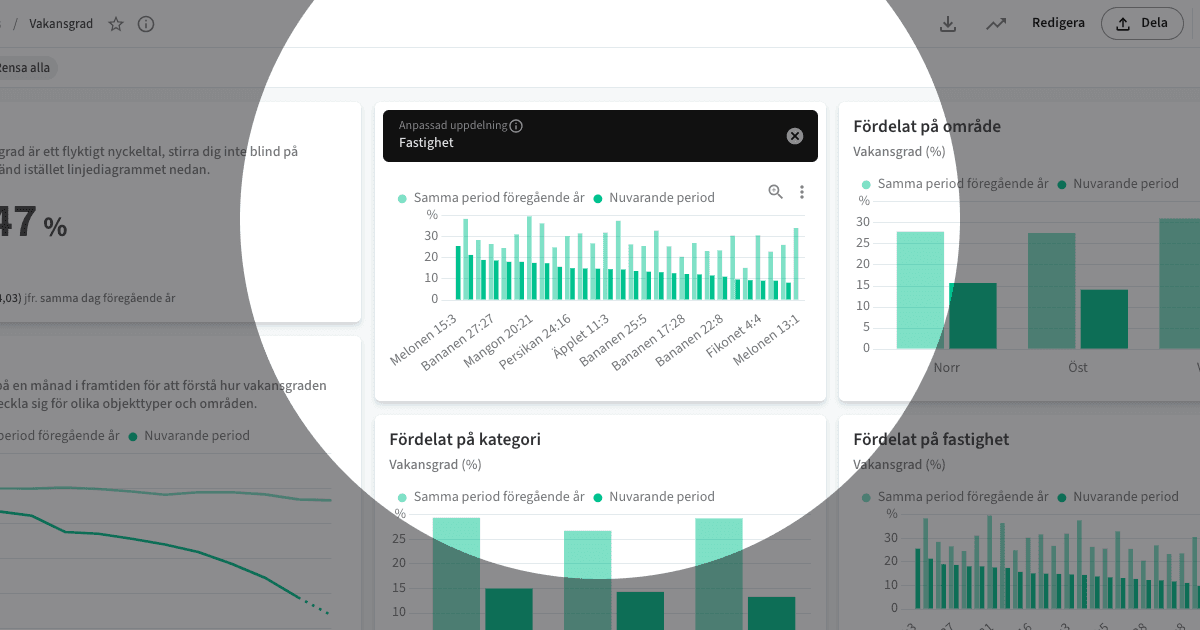
Service requests are one of the most reliable early warning signs of impending vacancy. A property with an accelerating influx of fault reports—not a one-time spike but a trend that builds week by week—typically shows increased vacancy within 60–90 days. The pattern is consistent.
Energy deviations per building that cannot be explained by seasonality or occupancy almost always point to a technical problem or a maintenance backlog. The signal is visible in the measurement data long before it appears in operating costs.
Energy deviations per building that cannot be explained by seasonality or occupancy almost always indicate a technical problem or a maintenance backlog. This signal is visible in the measurement data long before it becomes apparent in operating costs.
Properties that consistently exceed the portfolio average in terms of fault reports per unit tell a story of structurally neglected maintenance—even if each individual month looks acceptable when viewed in total.
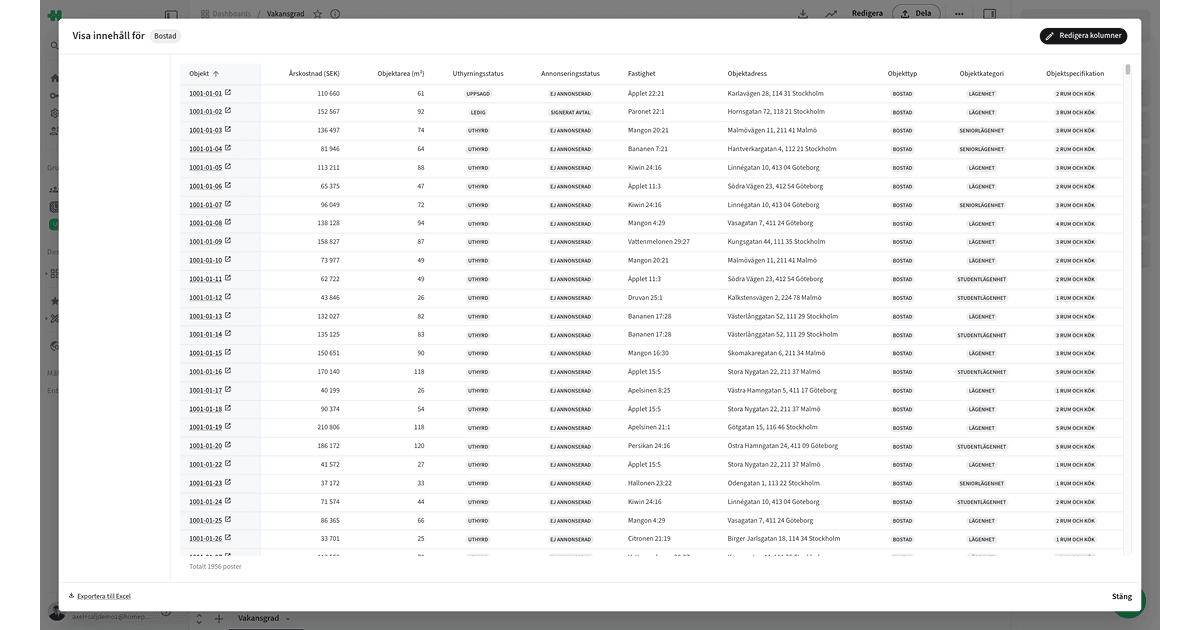
These signals are already present in your existing systems today: issue management, property management systems, and energy metering. The challenge is to link them to the net operating income—and to spot them in time.
Why It Still Doesn’t Happen
With a portfolio of hundreds of properties and thousands of transactions every week, it’s practically impossible to monitor everything manually. What isn’t monitored systematically isn’t monitored at all, no matter how skilled the property managers are.
On top of that, a single alert is rarely sufficient on its own. For it to lead to a decision, the right person needs to see it, understand the cost of inaction, have the authority to act—and then follow up to see if the action was effective.
Most real estate companies have parts of this chain in place. Hardly any have the whole thing.
What it looks like when the chain works
Mimer Fastigheter reduced its rental shortfall by 5.15 million kronor in eleven months. Stockholmshem saved 10 million kronor in six months. Grannstaden reduced vacancy time by 42 percent.
Those results didn’t come from new business systems or reorganizations. They came from the finance department having access to the right signals at the right time—and a way to turn them into concrete actions with assigned responsibilities, expected outcomes, and follow-up.
How Homepal Addresses This
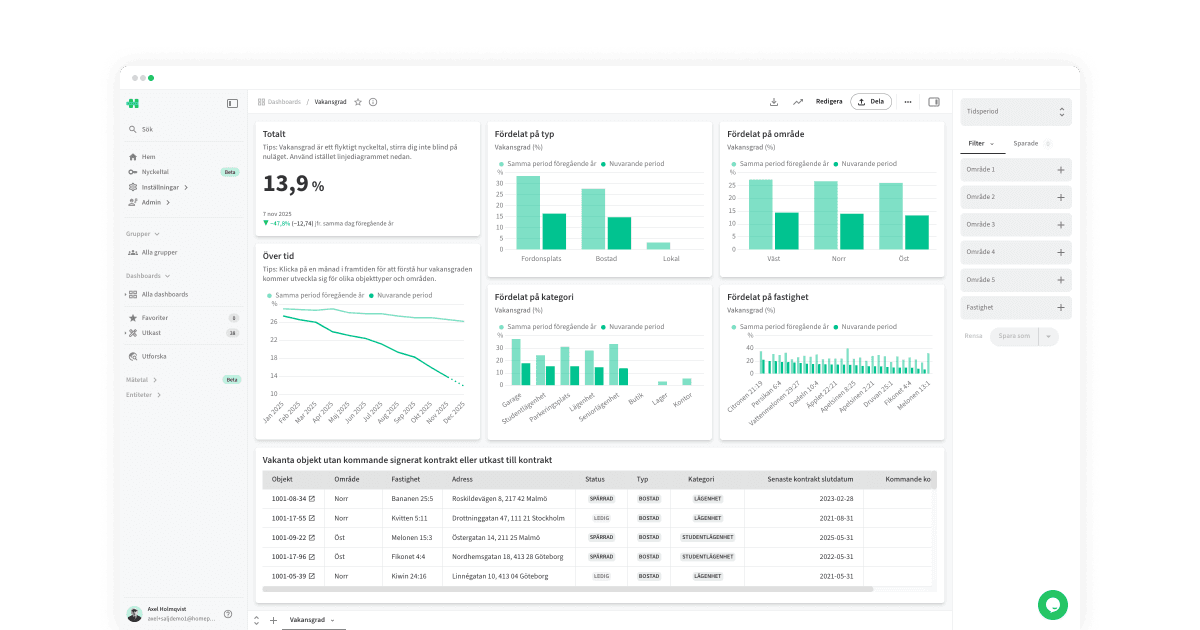
Homepal automatically identifies what is currently having the greatest impact on net operating income—down to the district and property level—without anyone having to perform manual analysis.
When an insight is identified, you can immediately turn it into a concrete action: assign a person in charge, specify the expected outcome and deadline, and follow up to ensure the change actually takes place. Nothing falls through the cracks.
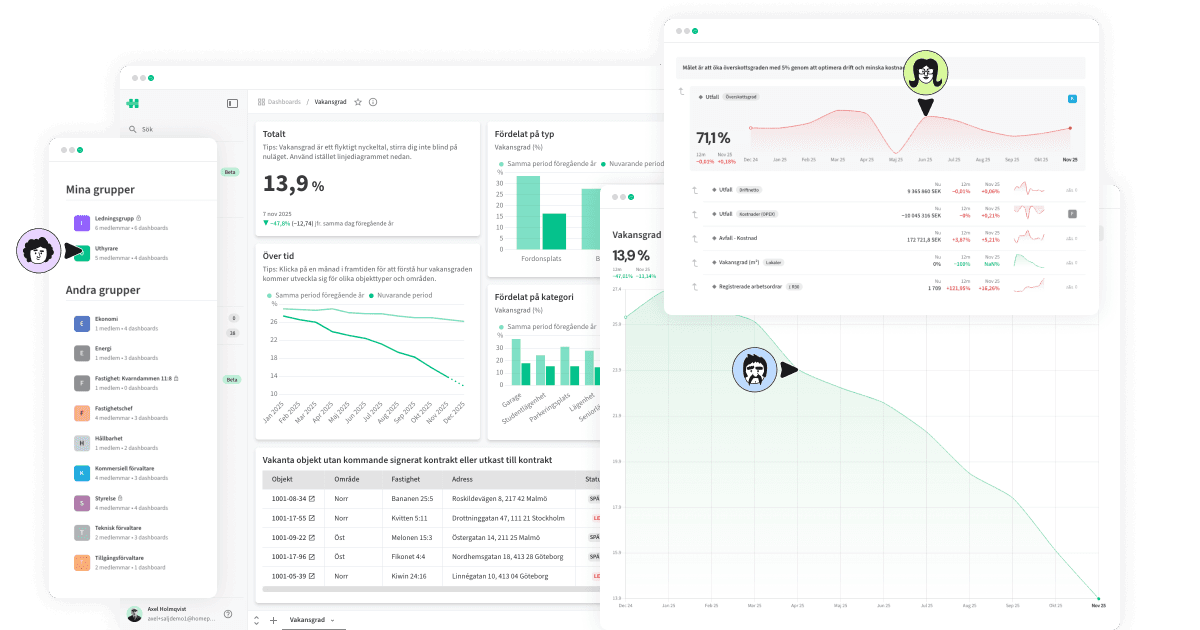
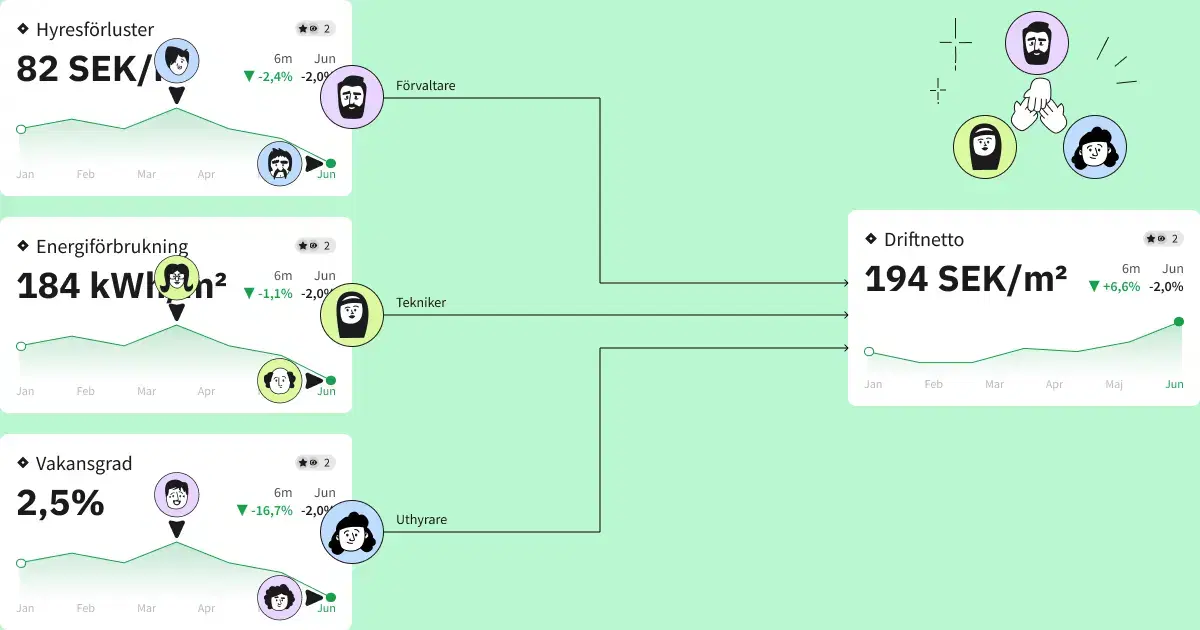
The entire organization works toward the same key performance indicators (KPIs) via a standardized KPI tree where net operating income is linked to the leading KPIs that drive it—always up to date and accessible to everyone, from the CFO to property managers.
The result is that you stop tracking net operating income after the fact and start improving it proactively.