When we launched Homepal, we had one goal:
To help property companies make better decisions – faster, more often, and in a more data-driven way.
But what does that actually mean?
- It means a property manager spots a pattern, asks a question, gets an answer – and adjusts their work.
- It means a decision is made because the numbers point in a direction, not just because “it feels that way.”
- It means insights lead to action.
Example: How one KPI transformed the rental process
One of our customers used Homepal to analyze the KPI:
UP: Terminated Unit – First Listing Published
Previously, they had no clear picture of how long it took from contract termination to a listing going live. Sometimes it felt slow – but no one knew for sure.
With Homepal, they quickly saw that in some areas, it took up to 35 days from termination to the first listing.
- That meant 35 days before a unit even hit the market – before anyone could apply.
- After adjusting routines for inspections and approvals, they brought the time down to under 8 days.
Same team. Same resources.
Just better information – available to the right person at the right moment.
It’s not about seeing numbers – it’s about acting on them
The real value of BI isn’t knowing more. It’s doing more, better.
Like when:
- a CEO sees that the termination rate is rising in certain housing types
- a leasing team notices that conversion from listing to signing is dropping
- technical management realizes that turnaround time for blocked units is longer than budgeted
And instead of scheduling an analysis session or asking for a new report – they act on it right away.
That’s why we built Homepal for reality – not just for visualization
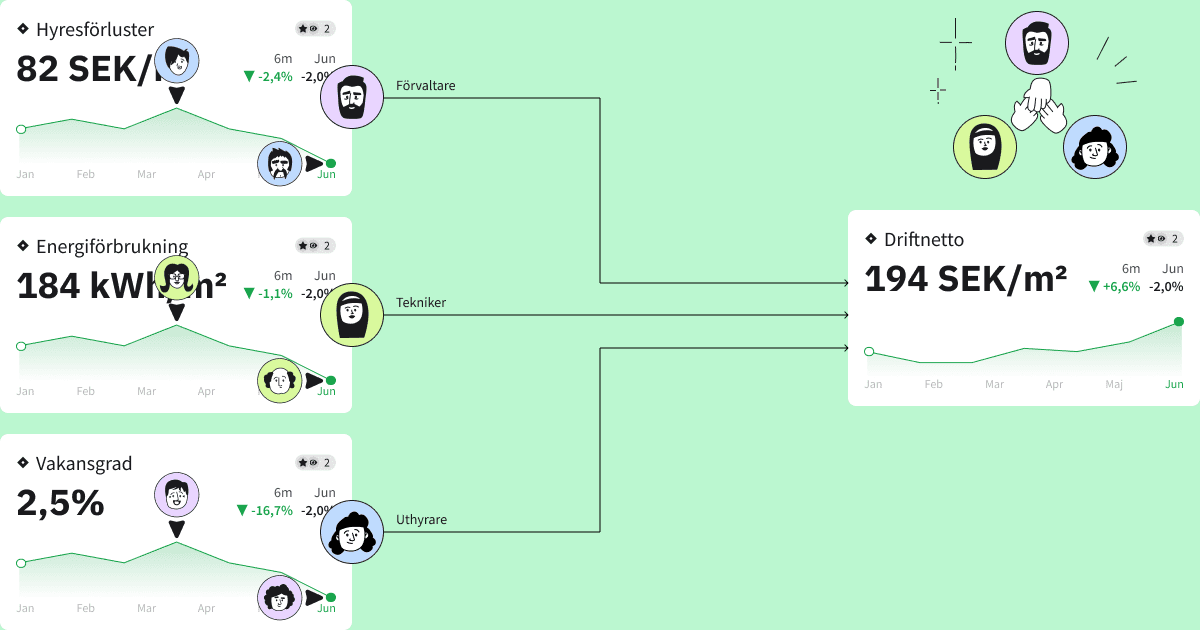
KPIs in Homepal aren’t just numbers in a system.
They’re tools for everyday decision-making.
They’re mirrors of reality – and starting points for improvement.
That’s what data-driven work really means.
And that’s what we help our customers do – every single day.
Next time we wrap up the series with a look ahead: